

AASF executive director Gisela Perez Kusakawa sat down for an informative conversation with CAPAC Executive Director Judith Teruya to discuss how Congress works and how its decision-making impacts federal funding and the future of U.S. science and technology.
At a time when federal investments in science and technology are under scrutiny, understanding the legislative process and how decisions are made on Capitol Hill is increasingly important.
Judith Teruya offered an inside look at how legislative priorities are set, how appropriations for research agencies are shaped, and why scientists play a critical role in informing Members of Congress.
You’ll leave with a clearer understanding of the federal landscape, how committees work and function, the decisions that affect the research community, and how scholars and scientists can help strengthen support for scientific research.
Watch both videos on YouTube here
Feature Speakers
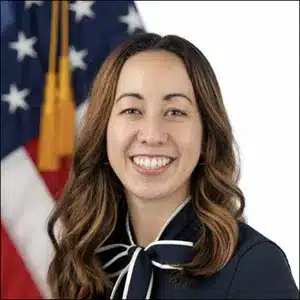
Fireside Chat with CAPAC Executive Director Judith Teruya
Judith Teruya is Executive Director of the Congressional Asian Pacific American Caucus (CAPAC) under Congresswoman Grace Meng, where she leads policy and political initiatives advancing the interests of Asian American, Native Hawaiian, and Pacific Islander communities in Congress. She previously served as Senior Advisor to the White House Initiative on Asian Americans, Native Hawaiians, and Pacific Islanders and as Senior Legislative Assistant to Rep. Meng, working on AANHPI policy, civil rights, immigration, and efforts to combat anti-Asian hate.

Moderator
Gisela Perez Kusakawa is Executive Director of Asian American Scholar Forum (AASF) and a civil rights attorney with extensive experience in anti-profiling, national security, and civil rights policy and advocacy. She has led coalition efforts to end the Department of Justice’s “China Initiative,” served as a legal strategist in amicus briefs for high-impact cases involving Asian American scientists, and is a nationally recognized voice on issues affecting Asian American scholars and communities.
Stay Informed. Stay Engaged.
Understanding how Congress works is an important step toward ensuring that scholars and scientists have a voice in decisions affecting research, higher education, and America’s scientific leadership.
Whether you attended the live discussion or are watching for the first time, Congress 202 offers valuable insights into the legislative process and opportunities for meaningful engagement.
Our next video is here: Congress 202. In this one we will go deeper into how scientists can engage to impact policy.